
A Brief Report focused on Places for People who Use Substances
Background
Prince George has been overwhelmed by concurrent and interacting crisis in housing, the unregulated drug supply, intergenerational trauma resulting from colonization and labour market disruptions. This has made poverty, mental health and addiction acutely visible to the public.
In response to escalating concerns from the public regarding social disorder, the City of Prince George launched Safe Streets Bylaw No 9209 in 2021. The bylaw includes six offenses including obstruction of a street or roadway and abandonment of chattel or other items of personal property that causes an obstruction. Since the bylaw was adopted, Bylaw officers have directed people to “move on” more than 630 times. However, “for unhoused and homeless people who have no choice but to be in, and survive in, public space, being moved on carries the risk of significant harm” (Hermer, 2026).[1]These include risk of drug poisoning due to the toxic drug crisis[2] and risks related to MMIWG especially given the geographic proximity to the Highway of Tears.[3]
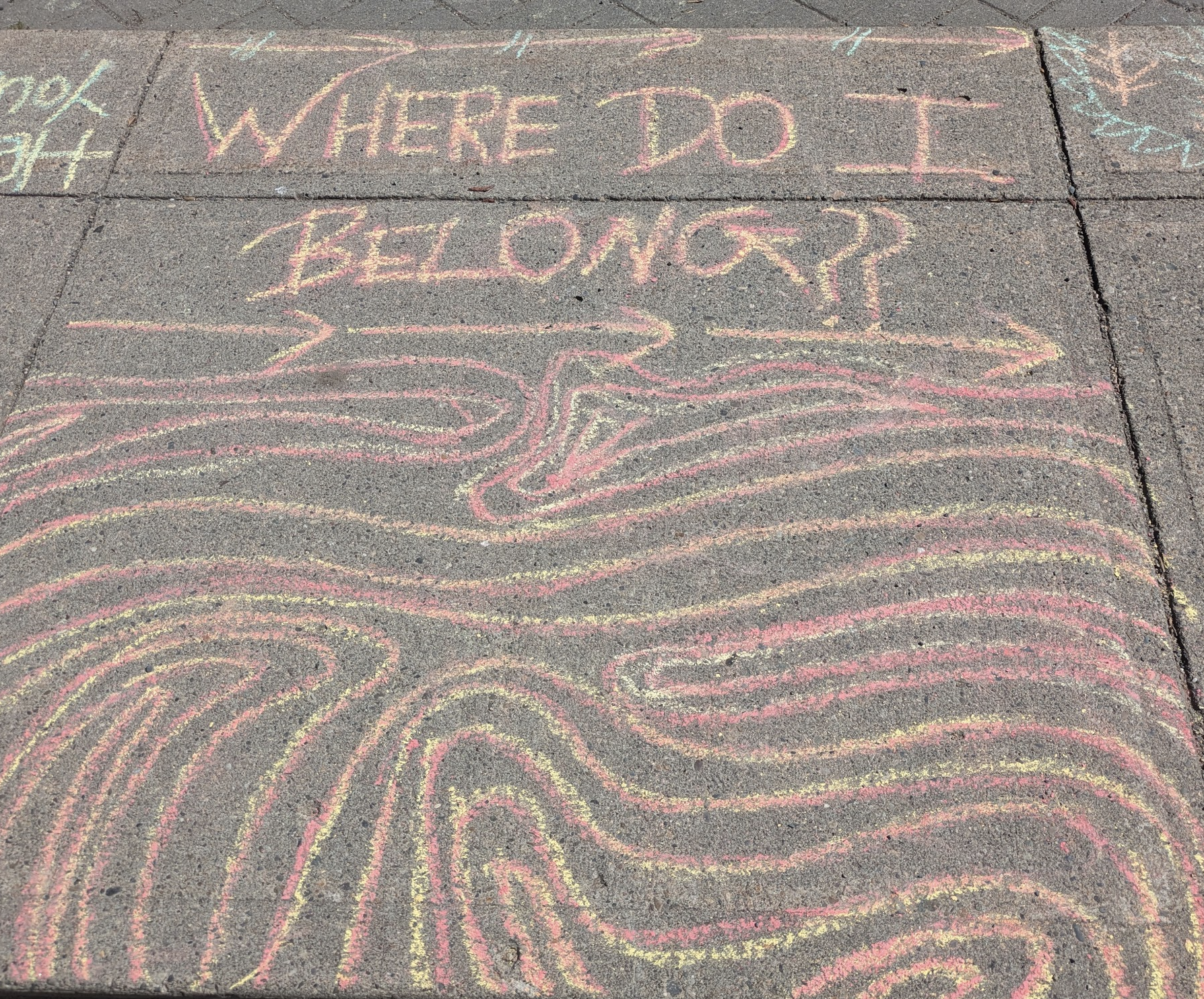
In view of these risks, the “Places of Belonging Project” was launched. The project asks: where do people without living rooms belong in Prince George? The project focuses on people without living rooms, recognizing that private social spaces are important to human growth, healing, creativity and contribution. People without living rooms may be homeless, live in temporary housing or have single room occupancies (SRO). In the absence of living rooms, free, warm and safe public spaces are critical. In the context of Prince George, it is important to note, that among those without living rooms a significant portion have had experiences with mental health and addiction.
Methodology
The Places of Belonging project is led by Dr. Amelia Merrick, alongside an Engagement team which includes six women, most of whom have relied on public space for survival at one point in their lives. Several of the team have lived experience with substance use.
Places of Belonging is a Community Engagement Project that draws on qualitative findings and quantitative secondary research. The qualitative findings have been learned through interactive public engagement at the Carier Sekani Family Services monthly Healing Fires, focus group discussions at Community Action Tables and key informant interviews. In total the project spoke to almost 200 people from across diverse backgrounds.
The Project is supported by an Advisory Team which has twenty-two members including representatives from the City of Prince George, BC Housing, UNBC, CNC, First Nations, non-profit organizations and community leaders.
Findings
- People without living rooms spend significant time outside
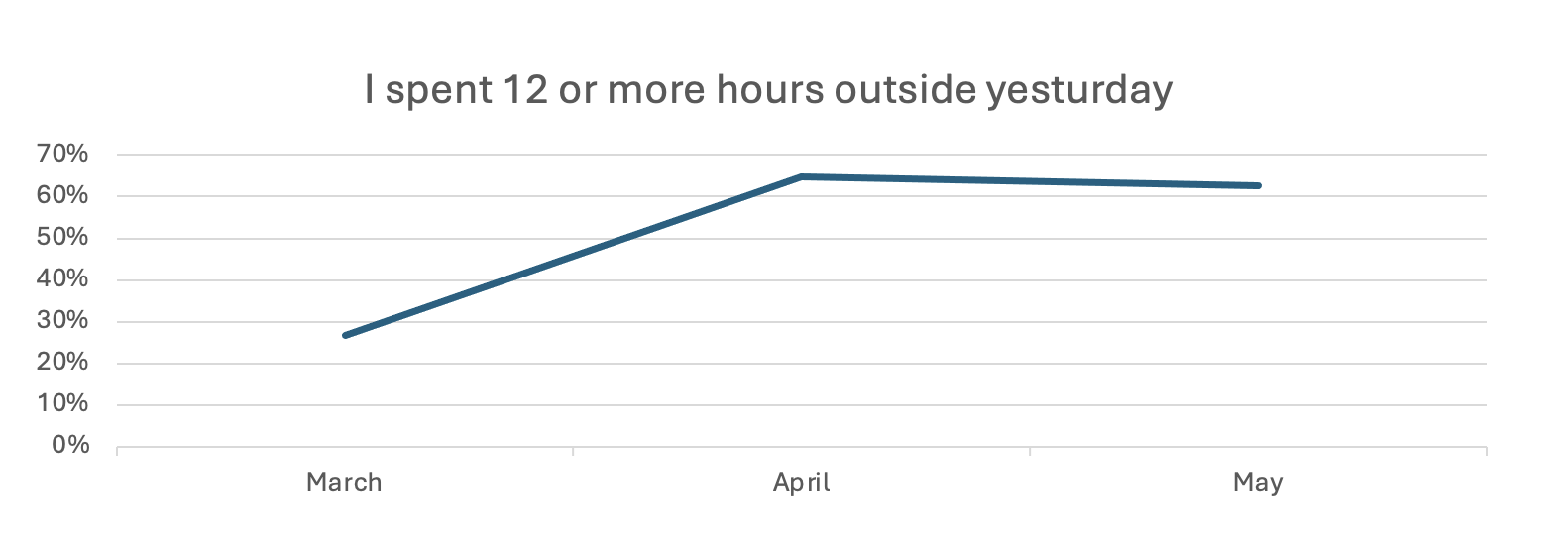
The amount of time people without living rooms spend outdoors changes seasonally. When the weather warms up, people without living rooms spend more time outside. Between March and May we saw a 40% increase in the number of hours people spent outside. In May, 63% of people without living rooms spent more than 12 hours outside and 25% of people spent 24 hours outside.
- There are insufficient spaces where people who use substances feel welcome
We asked 104 people, “if there was a free, warm and dry place to go, why wouldn’t you go inside?” The most common reason people stay outside is because there are too many rules and restrictions. Several people commented that indoor facilities felt like jail. Many people mentioned being banned from agencies; in fact, one agency had 80+ people on their banned list. This validated previous research by the Community Action Table which found that among 67 people who lived in subsidized housing or shelter, the majority of people had been banned from using shelter services. Reasons included “substances on person, refused to put belongings outside and argument with other patron or staff.”
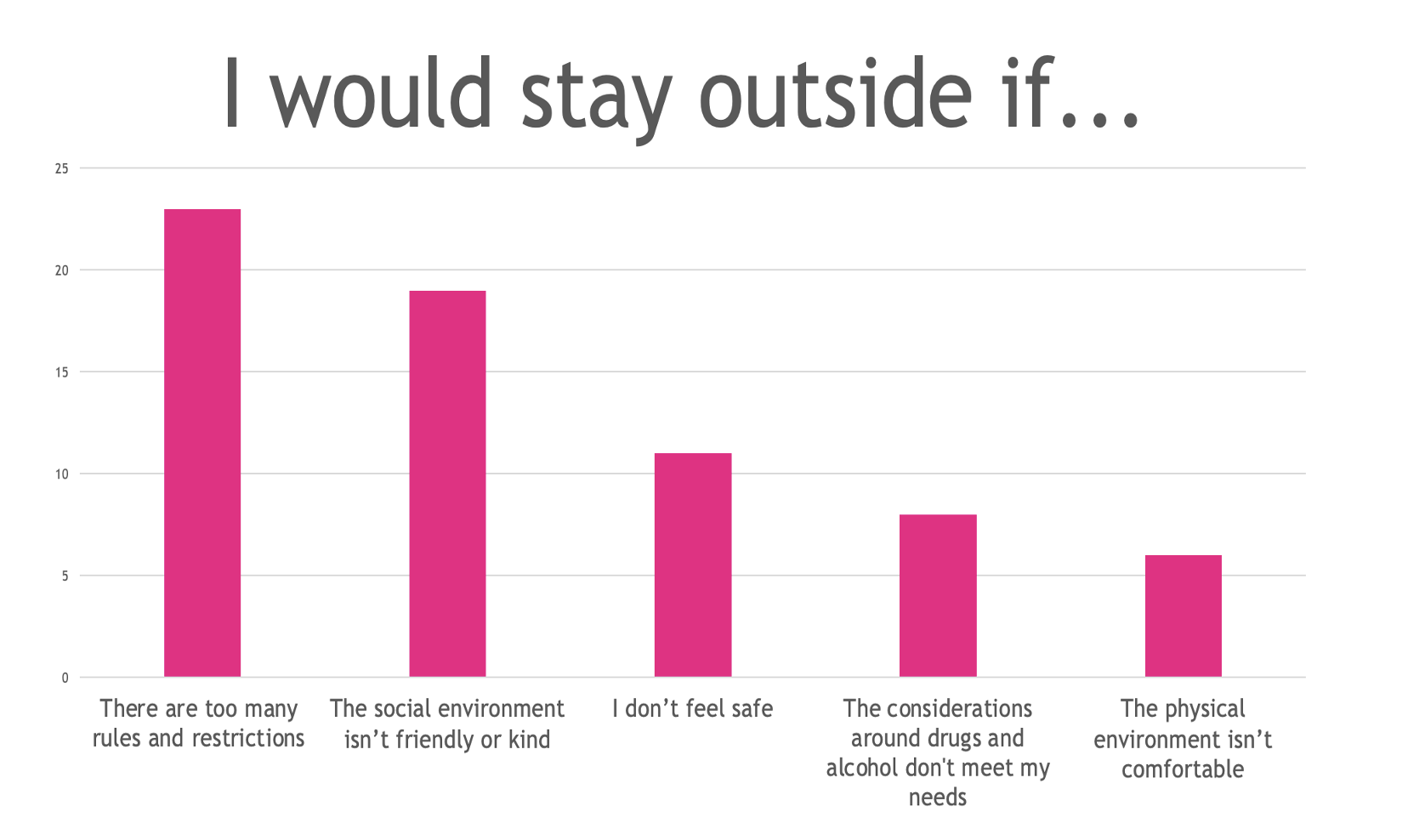
We also heard that people stayed outside because the considerations around drugs and alcohol don’t meet their needs. We heard more than a dozen people say they would go indoors if they could “use drugs safely” or “I can use drugs.”
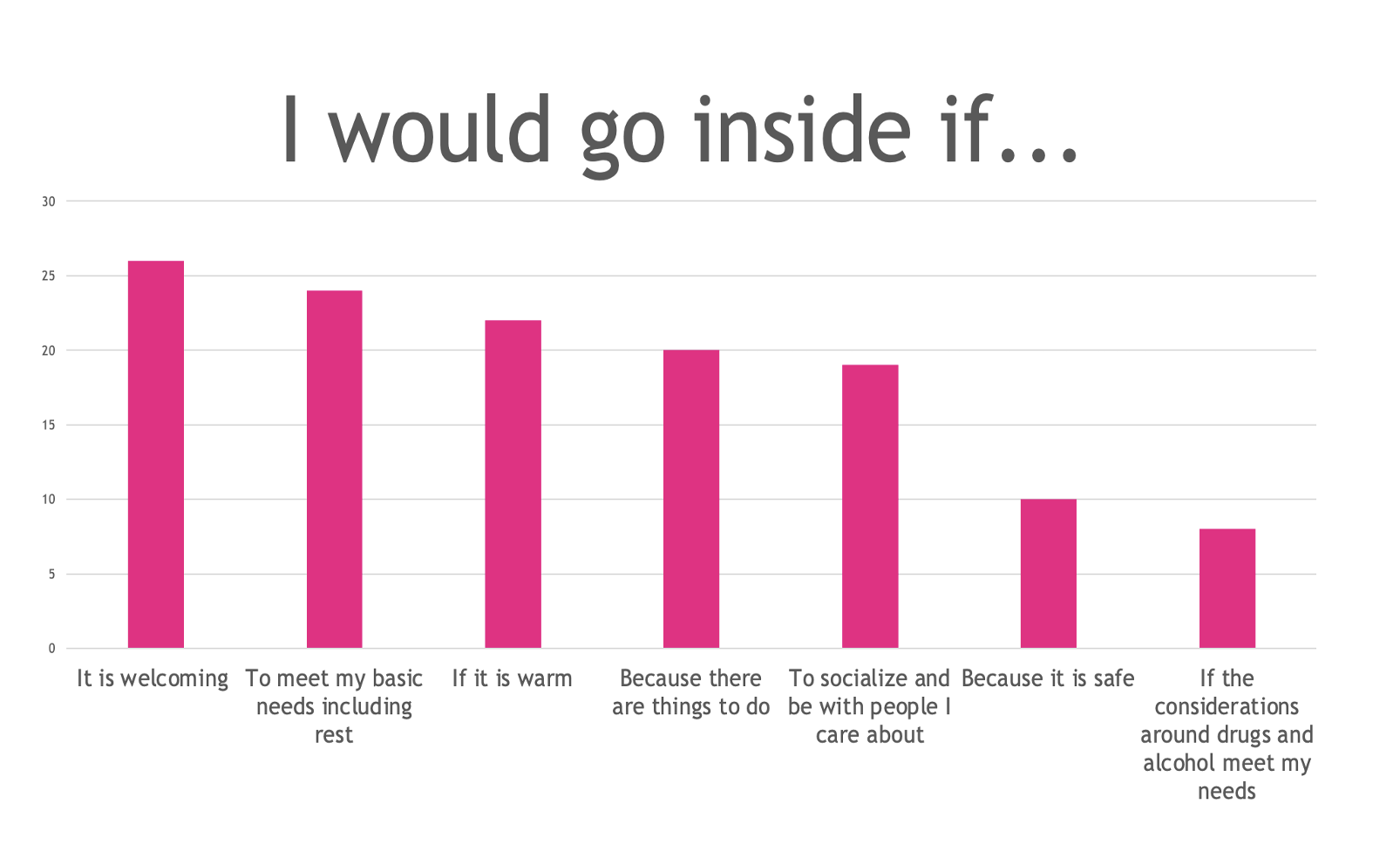
When we asked, “if there was a free, warm, dry place to go, what would make you choose to go inside?” the number one reason people gave was that they would go inside if it felt welcoming. Several people mentioned the importance of having space to socialize and be with friends and family. The approach from staff also mattered.
This was further supplemented by a review of available indoor services in Prince George - the “heat map” (Appendix 1). There are several hours in the day when no service agencies are open. It is important to note that the heat map was not coded to indicate places that allow people who are not sober.
We asked 55 people where they feel belonging in Prince George. We gave more than 50 options which had been identified by a group of peers. All options were public and included indoor and outdoor locations. During the August Healing Fire, participants identified the top three locations where they feel belonging.
We learned that the top places of belonging in Prince George are the Healing Fire, POUNDS Project, Fire Pit and the river. What we found very interesting is that thirteen people said they feel belonging outside, adjacent to a service, for example: “outside Fire Pit, outside outside Ketso Yo or outside ASAP.”
We learned that this was because they wanted to be close to services, but because of their substance use, they were not allowed indoors. Being adjacent to a service meant that if an overdose were to occur, they would have access to care. This further confirmed that there are insufficient indoor places where people who use substances can go in Prince George.
Discussion
We are concerned that so many people said that they prefer to stay because the practices of provincially-funded social service agencies have not evolved to reflect the current realities of the unregulated drug crisis. We were told by some service providers that their license or Northern Health contract could be jeopardized if they expanded services to include people using substances.
We recognize the excellent services provided by POUNDS. We are curious about their environmental design, staffing approach and service mandate and hope to explore this further. That said, we are concerned that Overdose Prevention Serices are not aligned to drug use patterns. Inhalation services are only available 27% of the week at POUNDS. That places a lot of responsibility on one service provider.
Finally, we wondered whether the Needle Exchange is meeting the needs of substance users. Only two people said that the Needle Exchange is a place where they feel belonging. We are curious whether changes to the approach taken by Northern Health might bring more value to Prince George.
[1]Hermer, J., The Complaint is the Crime, pg. 8, 9
[2] https://www.cbc.ca/news/canada/british-columbia/first-nations-toxic-drugs-2025-9.7165603 and https://www.myprincegeorgenow.com/246233/news/health-care/northern-health-reflects-on-10-year-anniversary-of-b-c-s-toxic-drug-crisis/
[3] https://www.cbc.ca/news/canada/british-columbia/highway-of-tears-anniverary-symposium-9.7155693