
A Brief History of Canadian Non-Profits
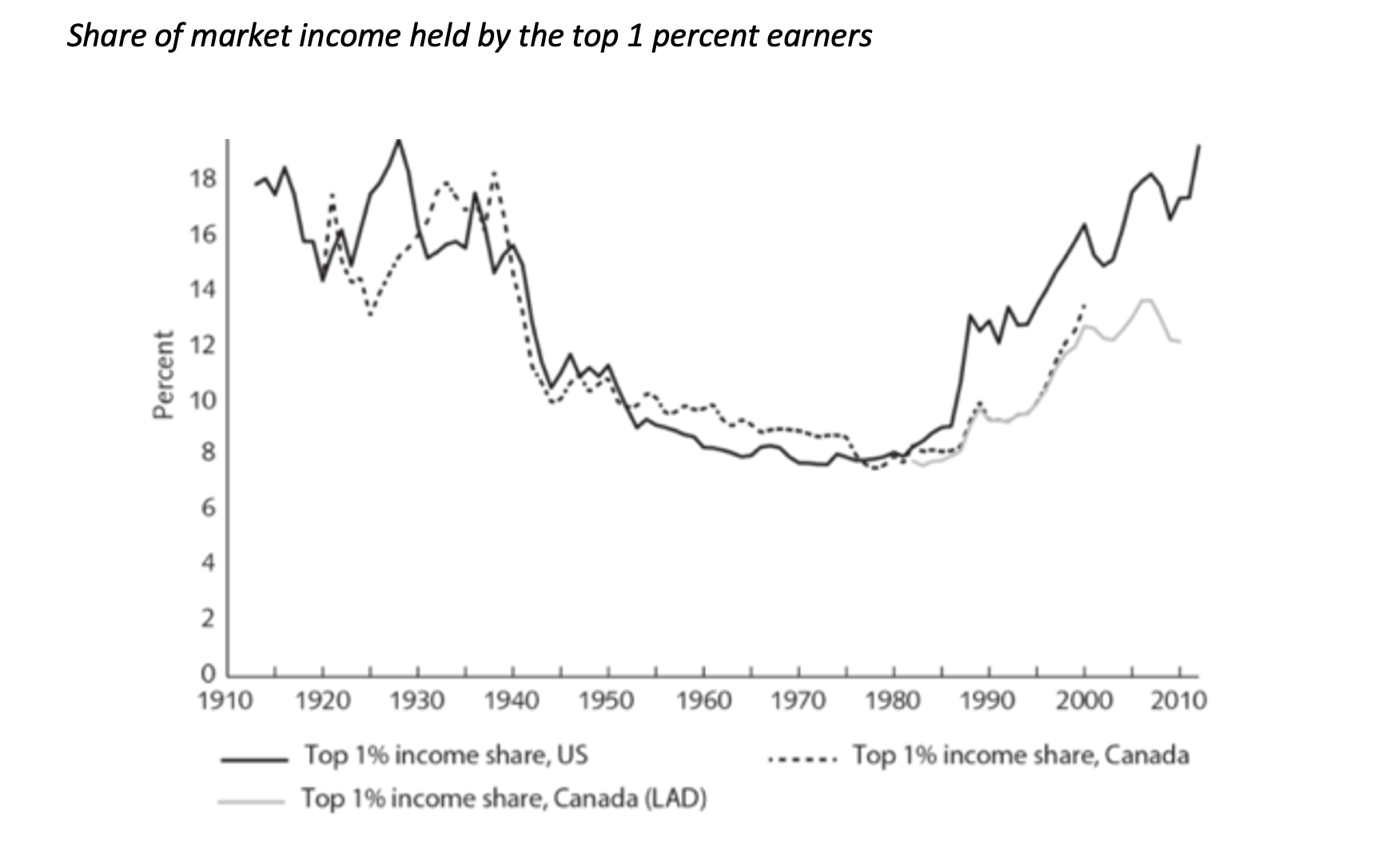
The role and function of non-profit organizations have change over time. Since the late 1970s, income inequality in Canada has risen and this has altered the institutional, economic, and political landscape for non-profit organizations. Similar to the Industrial era, today wealth is highly concentrated – we have more super rich people than ever before. But unlike the1920s, the tax base collected from the top 1 percent has dropped significantly, resulting in reduced revenues for the common good.
As a result, all levels of government have retrenched social safety nets; for example, we’ve seen reductions to employment insurance, health care, education and welfare. We’ve also seen drastic cuts to non-profit organizations (O'Halloran, 2007). In 2005, 51% of revenues to the non-profit and voluntary sector were from government, but by 2019, less than 31% of the budget for community non-profit organizations was government funding (Imagine Canada, 2019).
With increased polarization of economic well-being, the erosion of the middle class and the reduction of social safety nets, the needs of people have increased, creating greater demands for social, health, and education services (HR Council for the Voluntary & Non-profit Sector, 2008). Municipalities and the public expect that non-profits will pick up the pieces and in places like Prince George, the voluntary sector plays an important role in keeping the community and economy afloat (Ryser & Halseth, 2014).
The demands are greater than before but non-profits are experiencing funding constraints, increased competition for limited funding, and a heightened need to demonstrate accountability. Today, more funding is project-based, which is “short-term and unpredictable” creating chaos for clients and employment contracts.
In order to maintain funding, non-profits have turned their focus to service delivery. We are now seeing rifts across organizations that previously collaborated together. On one hand, there is a relatively small group of very large organizations who provide services of “key interest” to governments in the areas of health, education, and social services (Hall et al., 2005) and on the other hand, there are small organizations held together with passion, struggling to keep their lights on and staff paid.